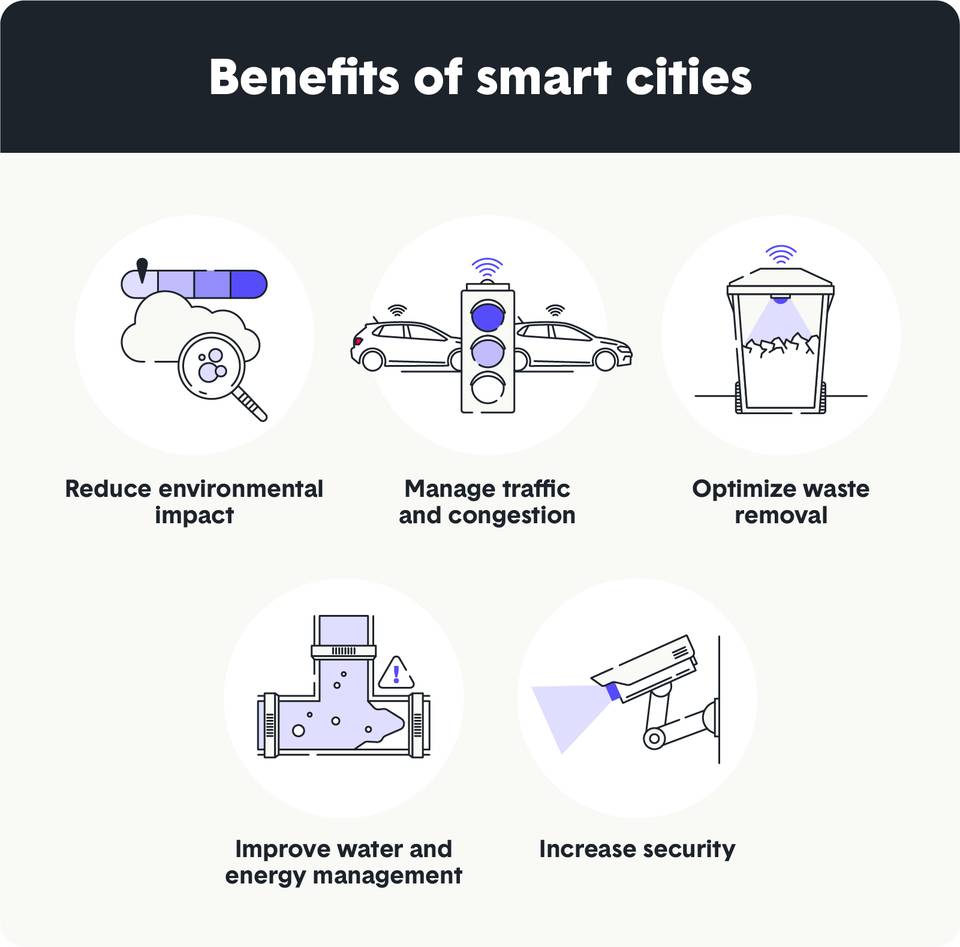
A smart city uses cloud-based data and technology to create a more efficient, sustainable, and better quality of life for the people who live there. A smart city alleviates traffic jams and improves resource management by “talking” to its citizens to make data-informed decisions in real time. Smart cities are not a shiny thing of the future: they’re ever-present today.
According to the IDC, smart city technology is expected to grow to $135 billion by 2021. If flying taxis or driverless cars are our future transportation, smart cities are taking population growth and urbanization risks by storm.
Below, we assess the benefits of smart cities and how they can improve the lives of their citizens. For a look at what exactly makes a city “smart” and the world’s leading smart cities, jump to the infographic.